How Solar Installers Can Turn Website Visitors Into Confirmed Bookings
Proven strategies for MCS-certified solar installers
Getting people to your solar website is only half the job. If homeowners visit, look around and leave without calling, completing a form or booking a survey, that traffic has little commercial value.
For MCS-certified solar installers, improving website conversion is often a better first move than simply spending more on advertising. The aim is simple: make the people already finding you more likely to take the next step.
Why solar websites lose potential customers
Solar is a considered purchase. Homeowners are unlikely to choose the first installer they find.
They will compare companies, read reviews, check credentials and look for reassurance before making contact.
Your website therefore needs to answer three questions quickly:
- Can I trust this company?
- Do they look experienced and credible?
- Is it easy to take the next step?
If the answer to any of those questions is unclear, potential customers may continue searching.
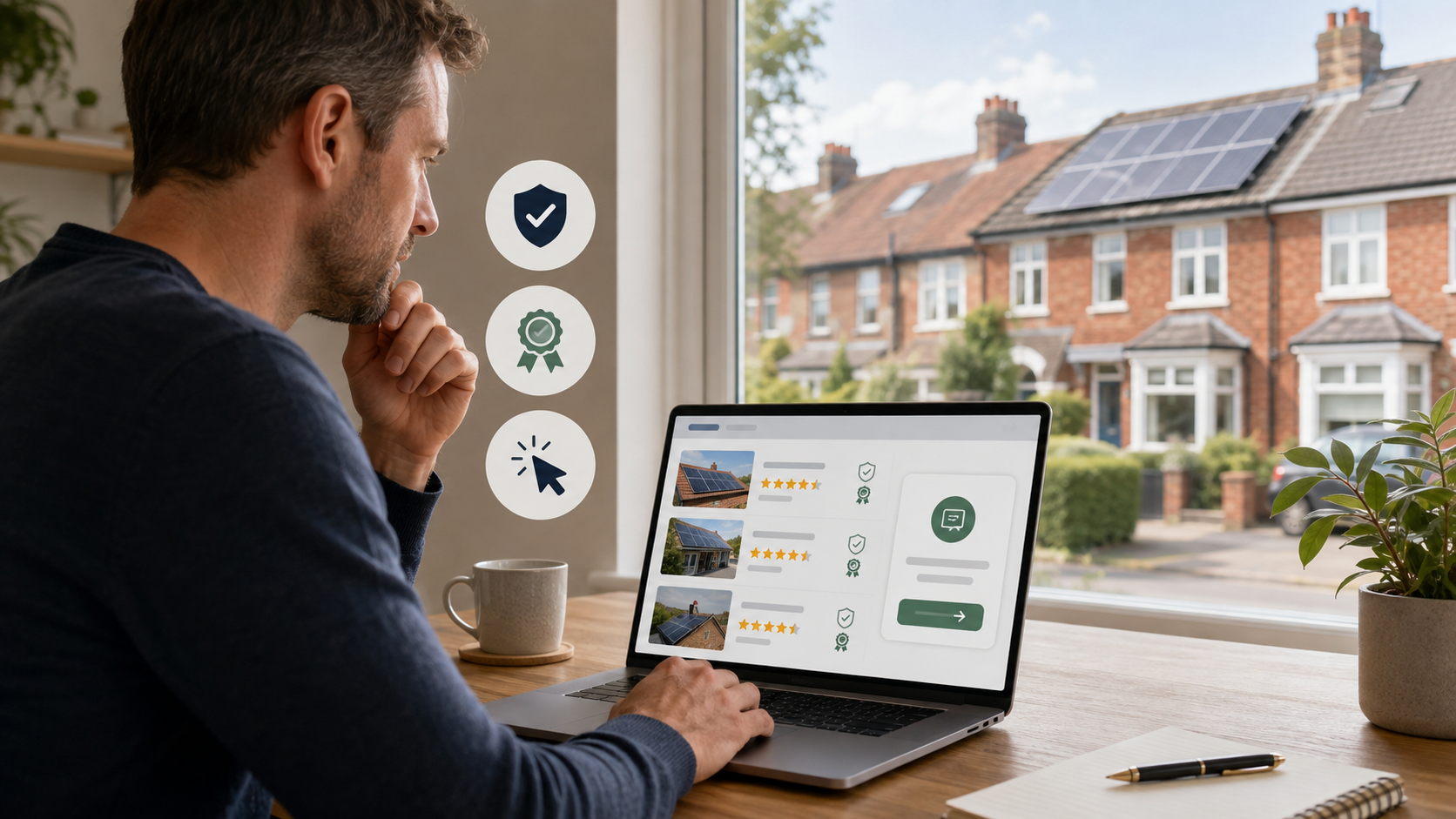
Build trust from the first click
Trust is one of the biggest factors influencing whether a homeowner enquires.
Your website should prominently display:
- MCS certification
- Genuine Google reviews
- Examples of completed installations
- Clear information about your process
- Areas you cover
- What happens after an enquiry
- Relevant guarantees, accreditations or memberships
Your MCS credentials should not be buried in the footer. Make them visible on key pages and briefly explain why they matter to homeowners.
Customer reviews and case studies can be particularly powerful. Real installation photographs, locations and customer experiences give prospective customers evidence that you have successfully completed similar projects.
You can learn more about our trust-building approach for solar installers.
Make the next step obvious
One of the easiest ways to lose enquiries is to make homeowners work too hard to contact you.
Generic buttons such as Contact Us are functional, but stronger calls to action tell visitors exactly what they are being offered.
For example:
- Book a free solar consultation
- Request a no-obligation quote
- Arrange a solar survey
- Speak to our solar team
Your main call to action should appear prominently near the top of the page and again naturally throughout longer pages.
Explain what happens next too. A simple statement such as “Complete the short form and a member of our team will contact you” removes uncertainty.
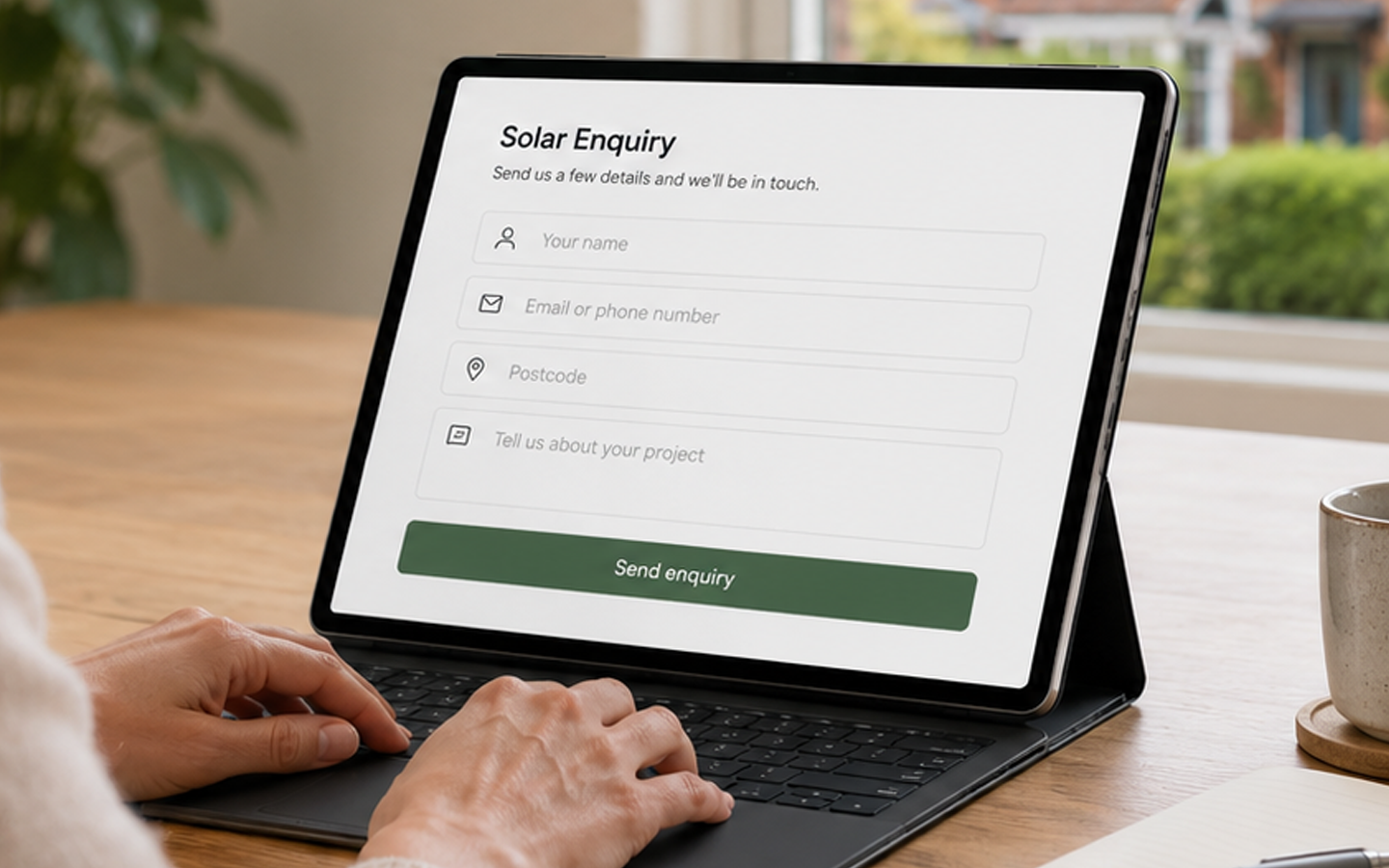
Keep enquiry forms simple
Long forms create unnecessary friction.
At the initial enquiry stage, you generally only need enough information to start a conversation. This might include:
- Name
- Telephone number or email
- Postcode
- Brief details about what they are interested in
Detailed information about roof dimensions, energy usage or property characteristics can be gathered later.
The easier it is to enquire, the more likely homeowners are to complete the process.
Respond quickly
The period immediately after an enquiry is critical.
Homeowners researching solar may contact several installers. Responding quickly shows professionalism and gives you an opportunity to start the conversation before a competitor does.
Your business should have a clear process for:
- Alerting the team when an enquiry arrives
- Responding to missed calls
- Following up web enquiries
- Recording where the enquiry came from
- Ensuring opportunities do not get forgotten
Where appropriate, automated acknowledgements by email or SMS can reassure the homeowner that their enquiry has been received while your team prepares to respond.
Create strong local visibility
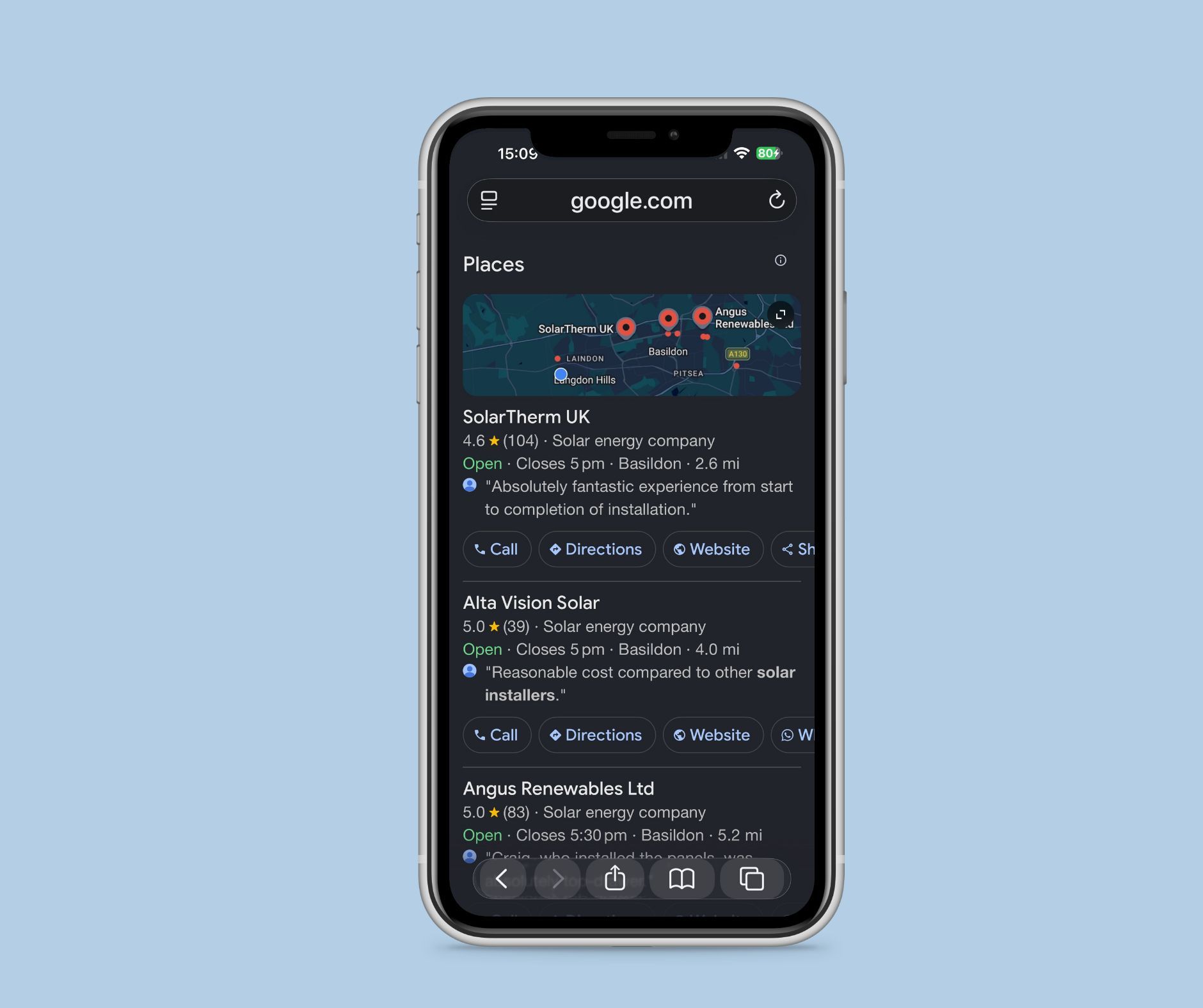
Many homeowners search for installers using location-based searches such as:
“solar installer near me”
or
“MCS solar installer in Chelmsford”
If you cover several important areas, dedicated local pages can help both search visibility and conversion.
Good local pages should contain useful information about the area, relevant installations, customer testimonials and the services you provide locally.
Avoid creating dozens of almost identical pages where only the town name changes. Useful, specific content is far more valuable.
For more practical advice, visit our Solar Growth Insights.
Make your homepage work harder
The top section of your homepage is valuable space.
Within a few seconds, homeowners should understand:
- What you do
- Where you operate
- Why they should trust you
- What they should do next
Keep it simple.
A clear headline, concise supporting statement, visible trust signals and one strong call to action will usually outperform a cluttered homepage trying to communicate everything at once.
Make mobile performance a priority
A significant proportion of potential customers will visit your website from a mobile phone.
Check that:
- Pages load quickly
- Telephone numbers can be tapped
- Buttons are easy to use
- Forms work properly on smaller screens
- Text is easy to read
- Important trust information appears quickly
A technically impressive website is worthless if homeowners find it frustrating to use.
Follow up homeowners who are not ready yet
Not every enquiry will turn into an immediate survey or installation.
Some homeowners will compare quotes, research batteries or wait until they are financially ready.
A structured follow-up process allows you to remain visible without repeatedly chasing people manually.
Useful follow-up content might include:
- Customer case studies
- Answers to common solar questions
- Information about batteries
- Explanations of the installation process
- Helpful reminders to continue the conversation
The objective is not to bombard potential customers. It is to remain useful and memorable until they are ready to make a decision.
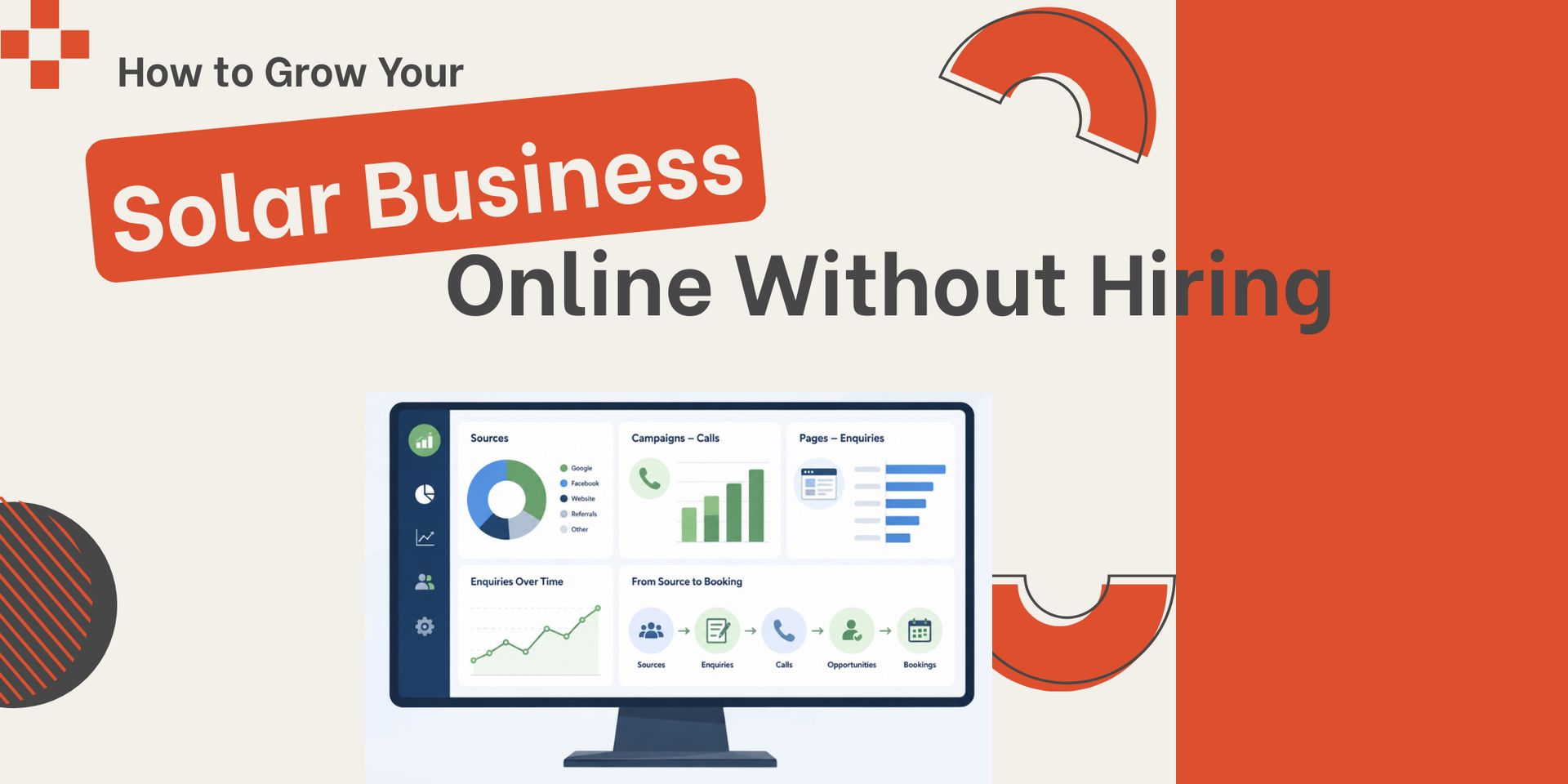
Know which marketing actually produces enquiries
Website visits alone do not tell you whether your marketing is working.
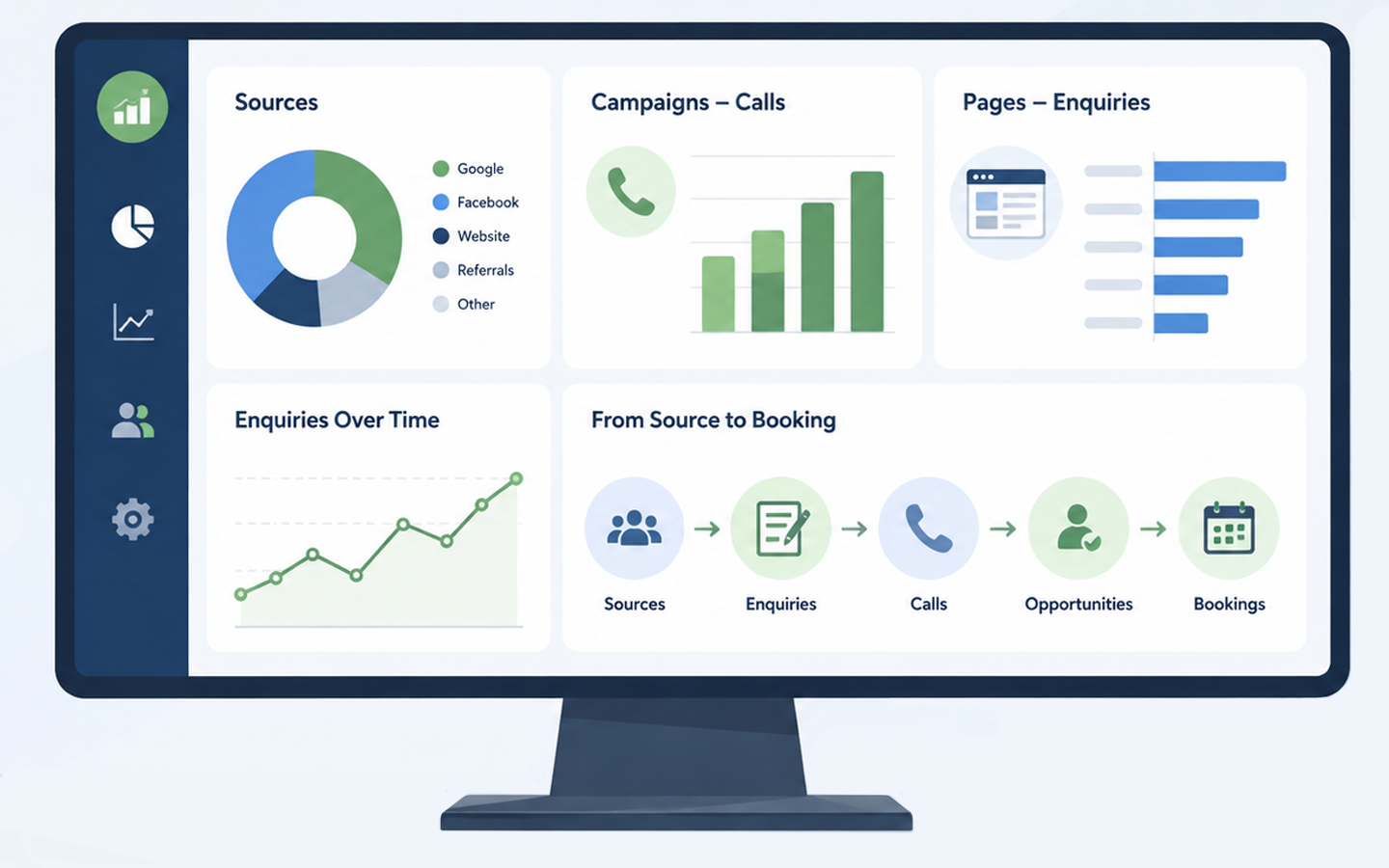
Solar installers should understand:
- Where enquiries originated
- Which campaigns generate calls
- Which website pages produce enquiries
- Which marketing sources lead to genuine opportunities
- Which channels ultimately produce surveys and installations
Call tracking, enquiry tracking and analytics can help separate marketing that merely generates activity from marketing that creates commercial opportunities.
That information allows you to invest more confidently in what is actually working.
More traffic is not always the answer
If your website is already attracting potential customers, increasing advertising spend may not be the smartest first step.
Before buying more traffic, look at what happens to the visitors you already have.
Strengthening trust, simplifying enquiries, improving response times and following up properly can increase the commercial value of your existing marketing without requiring more traffic.
If you would like to understand where potential enquiries may currently be slipping through, you can request a tailored assessment of your solar business.
Frequently Asked Questions
Why are people visiting my solar website but not getting in touch?
Common reasons include weak trust signals, unclear calls to action, complicated enquiry forms, poor mobile performance or simply not giving homeowners enough confidence to take the next step.
How can an MCS-certified installer build more trust online?
Make your MCS certification visible, show genuine customer reviews, feature real installations and clearly explain your process, experience and aftercare.
How quickly should we respond to an online solar enquiry?
As quickly as reasonably possible. Homeowners may be speaking to several companies, so having a clear process for responding promptly can make a substantial difference.
Do solar installers need separate pages for different locations?
Dedicated pages can help if you genuinely serve those areas. Each page should contain useful, location-relevant information rather than duplicated content with the town name changed.
How can we generate more enquiries without increasing our advertising budget?
Start by improving the conversion of your existing website traffic. Better trust signals, simpler enquiry routes, stronger calls to action, faster follow-up and improved enquiry tracking can all help.
What trust signals matter most to homeowners?
MCS certification, genuine customer reviews, completed installation examples, professional presentation, clear contact information and evidence that you have successfully helped customers like them.
Recent Posts