Andrew Hurrell • October 21, 2026
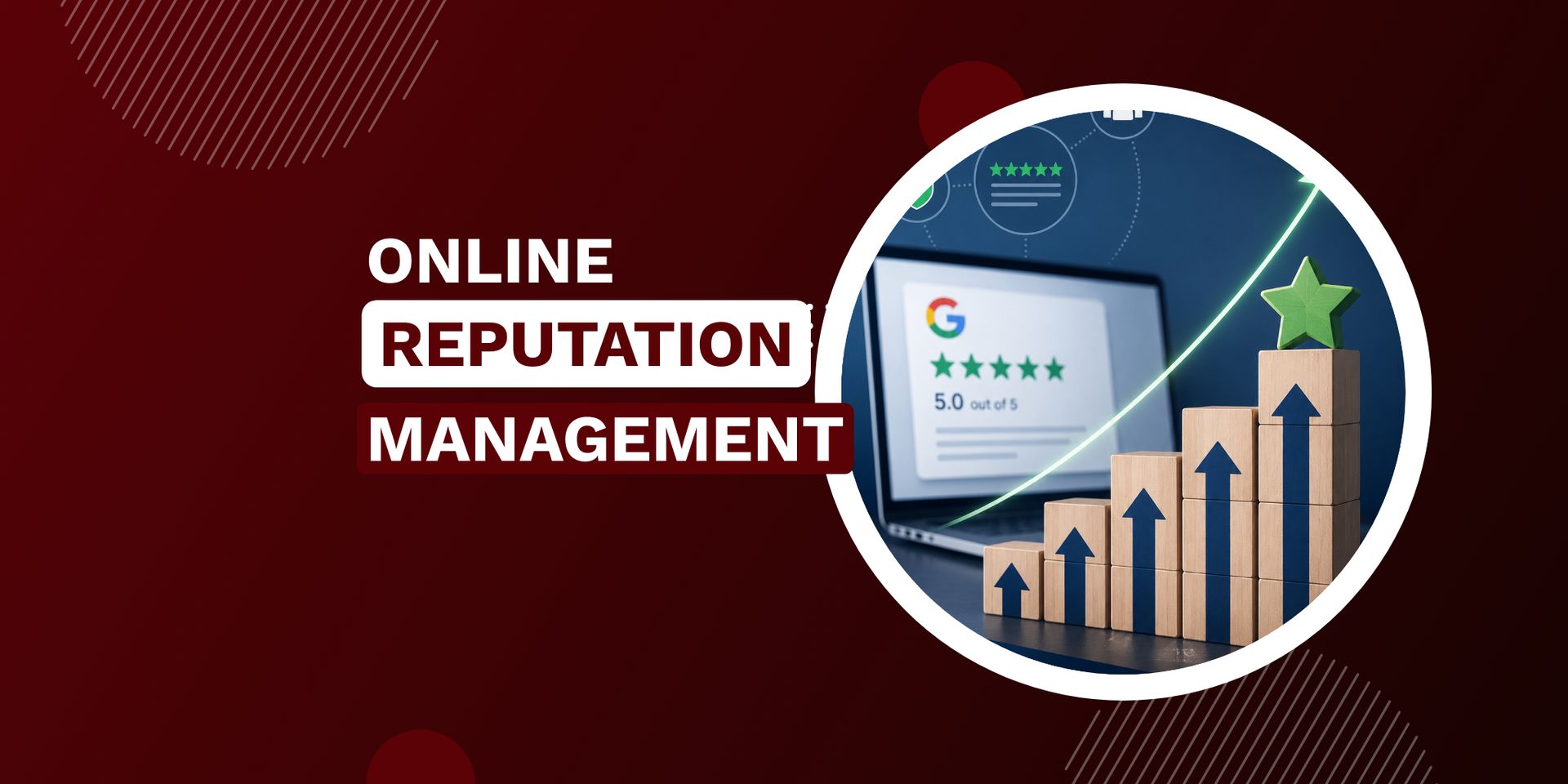
Online Reputation Management for Local Businesses
Online reputation management helps businesses build trust, attract more customers, and stay ahead of competitors
Your business could be doing everything right. Great service, fair prices, happy customers walking out the door.
But if your online reputation tells a different story, or no story at all, you are losing enquiries every single day.
Online reputation management for local businesses is about making sure that when someone searches your name or your trade in areas like Essex, Basildon, Billericay, or Brentwood, what they find builds confidence rather than doubt.
This guide covers everything you need to know, from where your reputation actually lives to what you can do right now to strengthen it.
What is online reputation management?
Online reputation management is the process of actively monitoring, influencing, and improving how your business appears across the internet.
For local businesses, that means paying attention to what customers say about you on Google, social media, and third-party review platforms, and then taking steps to shape that picture in your favour.
There are two sides to this. The passive side is what people find when they search your business name without you doing anything about it.
That might be a handful of old reviews, a half-completed Google profile, or a complaint that ranks on the first page of results. The active side is when you take control.
You respond to reviews, ask satisfied customers to share their experiences, and make sure your profiles are accurate and well-maintained.
For small and local service businesses, this matters more than it ever has.
Customers no longer ask friends and neighbours first.
They open Google, check the reviews, look at your star rating, and make a decision in under a minute.
If your reputation is not being managed, someone else is managing it for you, and not always in a way that helps.
Why your online reputation directly affects your revenue
Your reputation is not a soft measure of how well-liked your business is. It has a direct and measurable impact on how many enquiries you receive and how many of those turn into paying customers.
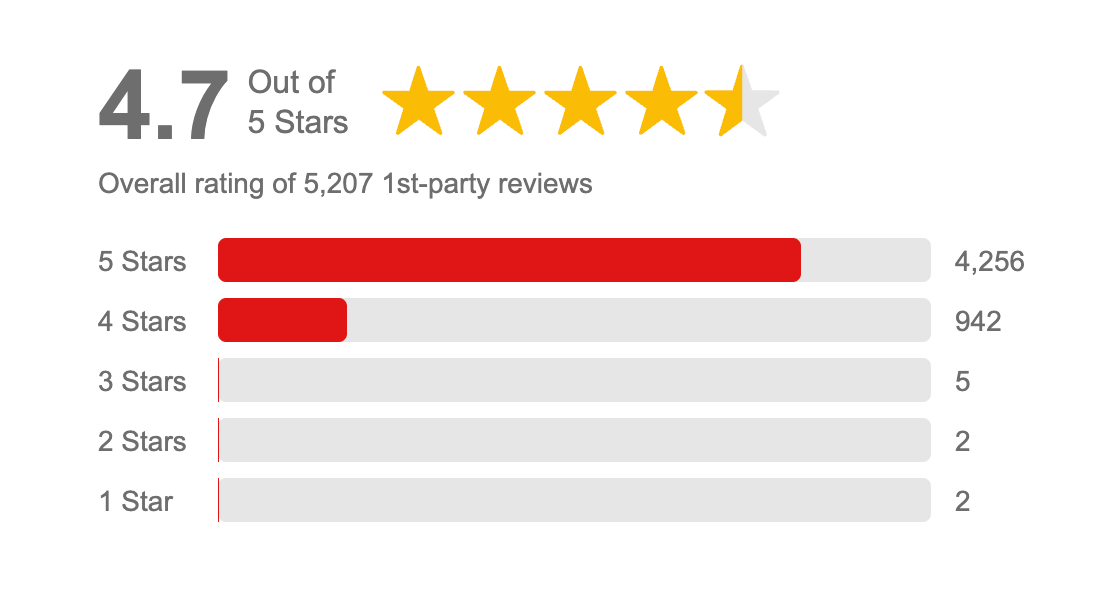
Research consistently shows that over 90% of consumers read online reviews before choosing a local business.
According to a 2026 survey by BrightLocal, 87% of consumers say they would not use a business with a rating below four stars.
That means a single patch of unmanaged negative feedback can quietly redirect a significant portion of your potential customers toward a competitor.
The numbers make this clear: a business with a strong, well-maintained reputation earns more trust, more clicks, and more conversions.
Beyond individual buying decisions, your reputation also affects how Google ranks you in local search results.
Businesses with more reviews, higher ratings, and consistent engagement tend to appear higher in the local pack, which is the map section that appears at the top of search results.
That visibility translates directly into phone calls, website visits, and booked appointments.
It is also worth thinking about the long-term picture. A business that actively builds its reputation creates a compounding advantage.
Each new positive review makes the next customer more likely to choose you, and over time, that credibility becomes one of your most valuable business assets.
Where your reputation lives online
Your online reputation does not sit in one place. It is spread across several platforms, and gaps or problems on any of them can undermine the impression you make on a potential customer.
Google reviews and your business profile
Google Reviews are the single most important part of your online reputation as a local business.
They appear directly in search results, on Google Maps, and whenever someone searches your business name.
A strong rating with a good number of reviews signals credibility instantly, while a thin or poorly rated profile creates doubt before a customer has even visited your website.
Your Google Business Profile is the foundation everything else is built on.
If it is incomplete or inaccurate, your reviews will carry less weight and your visibility in local search will suffer.
Google Business Profile optimisation is one of the most practical steps any local business can take to improve both its reputation and its search rankings at the same time.
Social media mentions and comments
Facebook, Instagram, and other platforms contribute to your reputation in ways that are easy to overlook.
A negative comment left unanswered on a Facebook post can be seen by hundreds of local people. An unresolved complaint thread on a community group can spread quickly, particularly in close-knit areas like Billericay or Brentwood where word travels fast.
Monitoring what people say about your business on social media is not about being defensive. It is about staying informed so you can respond thoughtfully and show that you care about the customer experience.
Even a brief, professional reply to a complaint tells potential customers far more about your business than the complaint itself.
Third-party review sites and directories
Platforms such as Trustpilot, Checkatrade, and Yell carry real weight with certain audiences.
Tradies and home service businesses in particular are judged heavily on their Checkatrade profiles.
If your listings on these sites are unclaimed, outdated, or full of unread feedback, you are missing an opportunity to strengthen trust with a segment of customers who specifically use those platforms to vet local businesses.
Claiming your listings is the starting point.
From there, keeping your business information accurate, responding to reviews, and actively encouraging customers to leave feedback all contribute to a well-rounded online presence that supports your reputation across multiple channels.
How negative reviews can harm a local business
A negative review on its own is rarely catastrophic. What causes real damage is when negative reviews go unanswered, or when a pattern of complaints is ignored over time.
Potential customers reading through your reviews notice both the feedback itself and how you responded to it.
Silence is often interpreted as indifference, and indifference is one of the fastest ways to lose trust.
The practical impact is significant.
A business with a 3.2-star rating and a string of unanswered complaints will consistently lose enquiries to a competitor with a 4.5-star rating and visible, professional responses to every review, including the critical ones.
In a local market where customers have several similar options to choose from, this gap in reputation management can represent a meaningful difference in monthly revenue.
The good news is that how you handle a negative review can actually work in your favour.
A well-crafted, empathetic response that addresses the issue honestly shows prospective customers that you take accountability seriously.
It turns a complaint into a demonstration of your character. The power of customer reviews extends beyond the positive ones, and understanding how to work with criticism professionally is a core part of managing your reputation effectively.
When responding to a negative review, keep it calm and factual.
Acknowledge what the customer experienced, offer to resolve the issue offline where possible, and avoid being defensive. Never argue publicly, even if you believe the review is unfair.
The goal is not to win the argument but to demonstrate to everyone reading that you handle problems with professionalism.
How to actively build a stronger online reputation
Managing your reputation is not just about putting out fires.
The businesses that stand out online are the ones that consistently generate fresh, positive feedback and use it strategically across everything they do.
Encouraging happy customers to leave reviews
Most satisfied customers do not leave reviews automatically.
They go home, get on with their day, and the thought never crosses their mind again. That does not mean they would not leave one if asked in the right way.
A simple, direct request at the right moment, such as just after completing a job or when a customer expresses genuine satisfaction, is often all it takes.
The most effective approaches are personal and easy.
A follow-up text message with a direct link to your Google review page removes friction. A brief verbal mention at the end of a job gives customers the nudge they need.
The key is consistency: making review requests a regular part of your process rather than an occasional afterthought. Combining this with building a customer referral programme gives you two parallel channels for generating trust-building evidence from your happiest customers.
Responding to every review, good and bad
Responding to positive reviews is something many business owners skip because it feels unnecessary. In practice, it is a simple signal that you are attentive, engaged, and grateful for your customers.
When someone searching for a local business in Essex sees that you reply to every review thoughtfully, it creates confidence before they have even made contact.
For positive reviews, keep responses warm and specific. Reference something from the review to show you have actually read it, and thank the customer genuinely.
For negative reviews, stay calm, address the concern directly, and invite the customer to continue the conversation offline.
Aim for responses that are professional without being stiff, and human without being casual.
Using reviews in your marketing
The reviews your customers leave for you do not have to stay on Google.
They are some of the most credible content you have, and they can do real work for you across your website, your social media posts, and your email campaigns.
A five-star review from a customer in Basildon or Brentwood placed prominently on a relevant service page can dramatically increase the likelihood of a new visitor getting in touch.
Screenshot testimonials, star rating graphics, and short customer quotes all work well as social content.
Featuring them in email newsletters keeps your reputation visible to an existing audience.
This is the practical side of using social proof to grow your business, and it costs nothing beyond the time it takes to repurpose the feedback you are already receiving.
Can AI help you manage your reputation?
AI tools have become genuinely useful for local businesses trying to stay on top of their online reputation without spending hours on it each week.
At a basic level, AI-powered tools can monitor the web for new mentions of your business, alert you when a new review appears, and flag potential issues before they escalate.
Beyond monitoring, AI can help you draft responses to reviews more quickly.
You still need to personalise and approve each reply, but having a solid starting point saves time and makes it easier to respond consistently.
Some tools can also analyse patterns in your reviews, identifying recurring themes in customer feedback that highlight areas for improvement or strengths worth shouting about in your marketing.
Understanding how Google Reviews and ChatGPT work together is becoming increasingly important as AI-generated search results and recommendation engines rely heavily on the reputation signals your business puts out.
Businesses with strong, well-managed review profiles are more likely to be cited and recommended by these systems.

Is DIY reputation management enough for local businesses?
Many local business owners start by managing their reputation themselves, and for some, that works well.
Responding to reviews, asking customers for feedback, and keeping your Google profile up to date are all things you can do without external help.
If you have the time and the consistency, these habits make a real difference.
The challenge is that most local business owners are already stretched.
Running the day-to-day operation, delivering the work, managing the team, and handling customer queries leaves little room for the kind of regular monitoring and proactive activity that good reputation management requires.
When you are busy, the first thing to slip is usually the work that feels less urgent but is quietly important.
Reputation management often falls into that category, until something goes wrong.
This is where professional support adds genuine value. A done-for-you service handles the monitoring, the responses, the profile maintenance, and the strategy while you focus on the work you are actually in business to do.
At Get Customers Fast, our approach is built around making this as simple as possible for local business owners in Essex and across the UK.
If you are weighing up whether to handle this yourself or bring in support, reading up on the reasons to hire a digital marketing agency gives a clear picture of where professional input tends to pay off most.
Real results: local businesses that improved their reputation
The impact of active reputation management becomes clear when you look at what changes for a business once it starts taking it seriously.
One home services business in Essex came to Get Customers Fast with fewer than ten Google reviews and a rating that had stagnated around 3.8 stars.
Over the following six months, a consistent process of requesting feedback from satisfied customers, responding professionally to every review, and optimising their Google Business Profile pushed their rating above 4.7 stars and more than tripled their review count. Enquiry volume from
Google increased noticeably within the first three months.
A trades business in Basildon had a different challenge: a handful of highly visible negative reviews from a difficult period that were actively putting new customers off.
By responding to those reviews calmly and professionally, building a larger base of positive feedback around them, and creating a stronger overall profile, the business changed the first impression it made on potential customers searching locally.
The negative reviews did not disappear, but they no longer dominated the narrative.
These outcomes are not unusual. They reflect what happens when reputation management moves from reactive to consistent and intentional.
You can read more about the kinds of results we achieve for local businesses on our client success stories page.
Frequently asked questions
What is online reputation management and why does it matter for local businesses?
Online reputation management is the process of monitoring and improving how your business appears across the internet, including on Google, social media, and review sites. For local businesses, it matters because most customers check reviews before making a decision. A strong, well-managed reputation directly increases the number of enquiries you receive and improves your visibility in local search results.
How do I respond to a negative Google review professionally?
Start by staying calm and avoiding any defensive language. Acknowledge what the customer experienced, thank them for their feedback, and offer to resolve the issue offline by sharing a contact email or phone number. Keep it brief and professional. The goal is to show anyone reading the review that you take concerns seriously and handle them with care.
Can managing my online reputation improve my local search rankings?
Yes. Google uses review signals, including the number of reviews, your average rating, and how regularly reviews come in, as part of its local ranking algorithm. Businesses that actively manage their reputation tend to rank higher in the local pack, which leads to more visibility, more website visits, and more enquiries.
How many reviews does a local business need to build trust with new customers?
There is no fixed number, but research suggests that customers begin to trust a business's rating once it has at least 10 to 15 reviews. More importantly, recent reviews carry more weight than older ones. A steady flow of new feedback signals that your business is active and consistently delivering good experiences.
What is the difference between reputation management and review generation?
Review generation is specifically about getting more customers to leave reviews. Reputation management is broader: it includes monitoring what people say about your business across all platforms, responding to reviews, managing your profiles, handling negative feedback, and actively building a positive online presence. Review generation is one part of a wider reputation management strategy
How long does it take to see results from reputation management efforts?
Most businesses start to see measurable improvements within three to six months of consistent effort. Rating improvements, increased review volume, and higher local search visibility often come first. The longer you maintain the process, the stronger the compounding effect becomes, with reputation acting as an increasingly powerful driver of new enquiries over time.
Do I need a professional service to manage my online reputation, or can I do it myself?
You can absolutely handle the basics yourself, particularly if you are consistent about asking for reviews and responding promptly. For business owners who are stretched for time or dealing with a more complex reputation situation, a professional service brings both the tools and the experience to manage it more effectively. The right choice depends on how much time you can realistically commit and what level of results you are aiming for.
Marketing Made Simpler - You’re Not On Your Own
More Customers. Bigger Wins. Better Business.